Weather Shifts and Platform Divergences Reshape Multi-Leg Wagers on Open-Air Events
Written by Quinn Walter · Jul 26, 2026

Weather Shifts and Platform Divergences Reshape Multi-Leg Wagers on Open-Air Events
Weather patterns have long influenced outcomes in outdoor sports, yet recent shifts in climate behavior combined with differences across betting platforms now alter how multi-leg wagers form and settle on events like tennis tournaments, horse racing festivals, and golf majors. Data from meteorological agencies show increased variability in rainfall, temperature swings, and wind speeds during peak summer months, while betting sites apply distinct algorithms and real-time feeds that create divergent odds on the same fixtures. Observers note these factors converge most noticeably in July 2026 as major open-air competitions unfold across Europe and North America.
Climate Variability Alters Event Conditions
Records compiled by the World Meteorological Organization indicate that July periods have featured more frequent interruptions from sudden downpours and temperature spikes than in prior decades, directly affecting court speeds in tennis, track firmness at racecourses, and green conditions on golf layouts. Those who track historical performance data find that such changes shift player and horse statistics within single sessions, forcing platforms to recalibrate live odds at different intervals. One study released through Environment and Climate Change Canada links these patterns to broader atmospheric trends, showing measurable impacts on event durations and scoring margins across multiple disciplines.
Platform Differences Drive Odds Spreads
Betting operators maintain separate data partnerships and update frequencies, which produces noticeable price gaps on identical multi-leg selections. Researchers examining market feeds report that some sites integrate proprietary weather models while others rely on public forecasts, resulting in staggered adjustments when conditions evolve. These discrepancies become pronounced during live play because one platform might suspend or shorten certain legs faster than another, leaving bettors to navigate varying cash-out values and settlement rules across accounts. Industry reports from the European Gaming and Betting Association highlight how such variances expand during high-volume periods when multiple outdoor events run concurrently.
Multi-Leg Strategies Adapt to Dual Pressures
Accumulators spanning several outdoor matches now require closer monitoring of both meteorological updates and platform-specific feeds. Data shows bettors increasingly split stakes across sites to capture the most favorable lines before weather triggers further shifts, while others delay final legs until conditions stabilize. Figures from academic analyses of betting behavior reveal that participants who cross-reference at least two platforms reduce exposure to sudden rule changes triggered by rain delays or wind adjustments. In July 2026 tournaments, this approach gains traction as forecasters predict continued instability through late summer schedules.
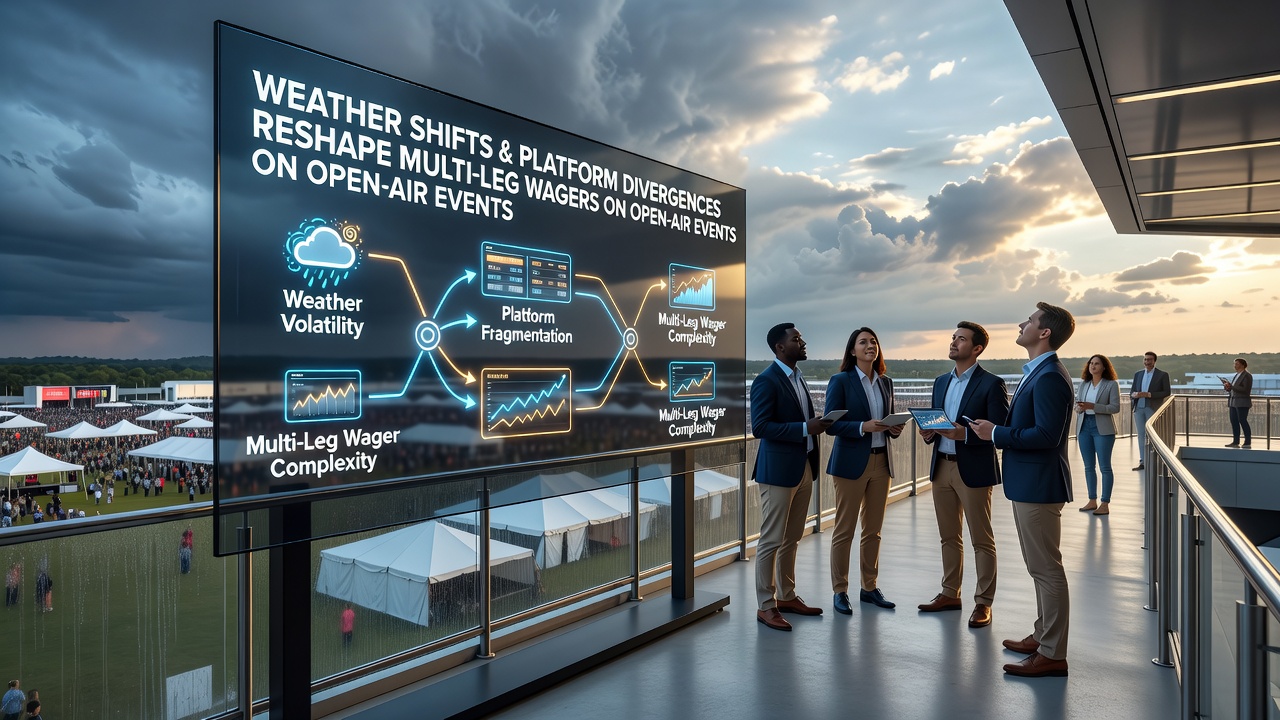
Take one documented case from recent European racing festivals where heavy showers arrived mid-afternoon: platforms updated going descriptions at staggered times, creating temporary mismatches in each-way and place markets that carried through to accumulators. Observers tracking these sequences found that bettors holding positions on slower-updating sites faced different settlement outcomes than those on faster feeds. Similar patterns emerged in tennis draws when humidity spikes altered ball behavior, prompting some operators to pause markets while competitors kept lines active with adjusted probabilities.
Data Sources and Market Monitoring
Access to consistent weather telemetry and platform transparency reports helps clarify these dynamics. A research paper from the University of Sydney’s gambling studies unit outlines how integrated monitoring tools assist in identifying value windows created by timing differences between sites. Government statistics from the Australian Bureau of Meteorology further support the correlation between forecast revisions and live betting volume spikes on outdoor fixtures. Those monitoring multiple feeds report that early awareness of impending changes allows repositioning within accumulators before adjustments cascade across markets.
Conclusion
Weather variability and platform-level differences continue to intersect in ways that reshape multi-leg wagering on open-air events throughout 2026. Market participants respond by refining monitoring practices and distributing activity across available operators, while data providers supply increasingly granular inputs on both climate and pricing movements. These elements together define current conditions for such wagers without altering the underlying mechanics of the events themselves.